
Calculating Universe Creation
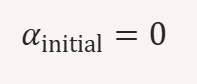
1. Initial State: Zero State Dormant Universe
Zero State Dormant Universe:
- In this initial state, numerical values and sequences are present but not interacting or generating active forces.
- This state is characterized by a lack of time and active interactions.
2. Transition to Active State
Perturbation or Fluctuation:
- A hypothetical fluctuation or perturbation triggers the transition from the zero state to an active state.
- This perturbation aligns numerical values and sequences, initiating interactions and the emergence of forces.
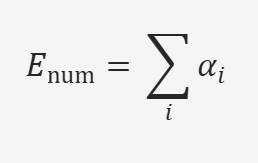
Activation of Numerical Energy:
3. Universe Types/States
On-On State:
- Positive Universe: Created from perfect sequence calculations.
- Anti-Universe: Created from perfect anti-sequence calculations.
- Harmonic Resonance: Ensures the stability of quantum states and alignment with spacetime curvature.
On-Off State:
- Potential Universe: Does not fully transition to an active state, remaining in a dormant condition.
- Numerical Interaction: Numerical values and sequences fail to generate active forces, leading to instability and potential collapse.
Off-On State:
- Quantum State Transition: Oscillates between dormant and active phases.
- Numerical Interaction: Fluctuating numerical values create transient forces and interactions.
Step-by-Step Process
- Initial Numerical Values:
- Assume initial numerical values for the universe: αinitial\alpha_{\text{initial}}.
- Perturbation triggers activation: αinitial→αactive\alpha_{\text{initial}} \rightarrow \alpha_{\text{active}}.
- Numerical Energy Activation:
- Numerical energy for active state: Enum=∑iαactiveE_{\text{num}} = \sum_{i} \alpha_{\text{active}}.
- Numerical Attraction Force:
- Assume numerical attraction constant: κ=1×10⁻⁶\kappa = 1 \times 10^{-6}.
- Calculate numerical attraction force: Fnum=κEnum1Enum2r2F_{\text{num}} = \kappa \frac{E_{\text{num1}} E_{\text{num2}}}{r^2}.
- Creation of On-On Universes:
- Positive Universe:
- Sequence: αpos=1×10⁶\alpha_{\text{pos}} = 1 \times 10^6.
- Harmonic Resonance: Ψpos=∑nAnei(ωt+ϕ)\Psi_{\text{pos}} = \sum_{n} A_{n} e^{i (\omega t + \phi)}.
- Anti-Universe:
- Anti-Sequence: αanti=−1×10⁶\alpha_{\text{anti}} = -1 \times 10^6.
- Harmonic Resonance: Ψanti=∑nAne−i(ωt+ϕ)\Psi_{\text{anti}} = \sum_{n} A_{n} e^{-i (\omega t + \phi)}.
- Positive Universe:
- Creation of On-Off Universes:
- Potential Universe:
- Numerical values: αon-off=0\alpha_{\text{on-off}} = 0.
- Lack of numerical interaction: Numerical sequences fail to generate active forces.
- Potential Universe:
- Creation of Off-On Universes:
- Quantum State Transition:
- Fluctuating numerical values: αoff-on=δ(t)\alpha_{\text{off-on}} = \delta(t).
- Numerical energy: Enum-off-on=αoff-onE_{\text{num-off-on}} = \alpha_{\text{off-on}}.
- Quantum State Transition: